
📌 East London info@htscaffoldingltd.co.uk | 07479 846717 / 07840 242385
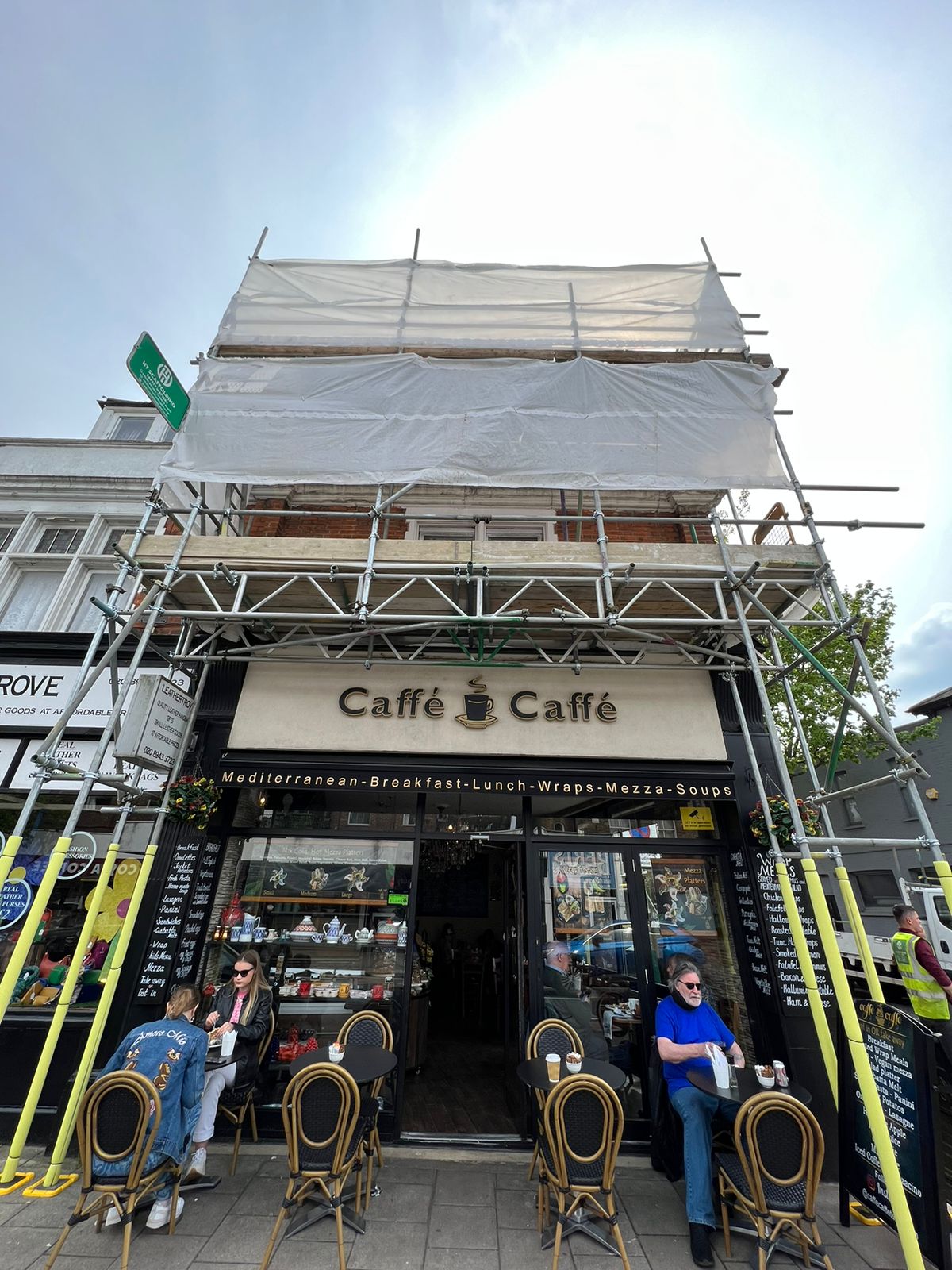
Refurbishing a commercial property involves more than organising the building work. Business owners and property managers may also need to coordinate tenants, deliveries, customer access and several contractors working to different schedules.
Arranging commercial scaffolding in East London should be part of that wider planning process. The right starting point is a clear understanding of the work, the building and how the property will be used throughout the project.
At HT Scaffolding Ltd Ltd, we provide tailored scaffolding solutions for commercial and domestic properties across East London, wider London and the surrounding areas. With over 12 years of hands-on experience, we support projects ranging from building restoration to commercial redevelopment.
Our approach is guided by a simple principle: do what is right, not what is easy.
Here is what to consider when planning scaffolding for your next commercial refurbishment.
Define the Full Scope of Your Commercial Project
Before discussing installation dates, establish which parts of the building require work and what your contractors need to do.
A project focused on external decorating may have different requirements from one involving roof repairs, brickwork restoration and a wider refurbishment. Even when several tasks affect the same part of a building, their access requirements should not be assumed to be identical.
Ask your contractors to explain where they need access and how their work fits into the overall programme. Share the full scope with your scaffolding provider, including later phases that have already been identified.
This is particularly useful when work is being commissioned by more than one party. A landlord might be arranging repairs while a tenant is planning separate improvements. Bringing those requirements together gives the scaffolding team a clearer brief.
Explain Whether the Building Will Remain Occupied
An empty property and an occupied business premises need different planning conversations.
Where a building will remain in use, explain who uses it and how. That might include staff arriving throughout the day, customers visiting a shop, tenants accessing separate units or deliveries using a particular entrance.
Do not assume that existing access arrangements can continue unchanged. Raise them early so they can be considered alongside the proposed building work and scaffolding requirements.
Useful details to discuss include:
- Entrances and shared routes: Which access points serve staff, customers, tenants or neighbouring properties?
- Deliveries and collections: Where do vehicles arrive, and are there established delivery times?
- Working hours: When is the property occupied, and when are contractors expected on site?
- Other planned activity: Will additional building work or material deliveries take place during the same period?
The purpose is to identify practical requirements before arrangements are agreed, rather than discovering them on installation day.
Plan Scaffolding Around the Different Stages of Work
Commercial refurbishments do not always happen in one continuous phase. Different contractors may need access at different times, and some areas of the building may be completed before others.
For example, a project might begin with external repairs before moving on to decorating and finishing work. Explain this sequence to your scaffolding provider so the complete programme can be considered.
Where phased work is planned, discuss the intended stages rather than assuming scaffolding can be altered or removed whenever a contractor finishes a task. Any proposed changes need to be assessed by the scaffolding team.
It is also worth distinguishing between target dates and confirmed dates. An outline programme is useful for an initial enquiry, but everyone involved should understand which parts are still subject to change.
Agree Who Will Coordinate Scaffolding Arrangements
A commercial project can involve a building owner, managing agent, tenant, main contractor and several subcontractors. Without a clear point of contact, instructions can become fragmented.
Decide who will coordinate the scaffolding arrangements and communicate changes to the provider. That person should have access to the current work programme and be able to gather requirements from the relevant contractors.
For example, a request to bring dismantling forward should account for any other trade that still needs access. Equally, a contractor’s revised schedule should be communicated to the person managing the scaffolding booking.
Agreeing these responsibilities early gives everyone a clearer route for raising questions and confirming decisions.
Compare Commercial Scaffolding Quotations Carefully
When reviewing quotations for commercial scaffolding in East London, consider the proposed scope as well as the price.
Check whether each quotation reflects the same working areas, project duration and access requirements. A lower headline figure is difficult to assess without understanding what has been included.
Ask your scaffolding provider to explain the hire period allowed for, the arrangements covered and how extensions or changes would be handled.
It is particularly important to mention known project phases before requesting a quotation. A price based on one stage of work may not reflect the requirements of the complete refurbishment.
You do not need to prepare a technical scaffolding design yourself. A clear project description, supported by your contractors’ requirements, provides a useful basis for discussing the appropriate solution.
Include Dismantling in the Refurbishment Programme
The end of the main building work does not necessarily mean every task requiring access has finished.
Before arranging scaffolding removal, check with the relevant contractors that their work is complete and that any outstanding finishing tasks have been identified. Confirm the position across the project rather than relying on one trade’s completion date.
Removal arrangements should also account for activity around the property, including access requirements and other scheduled work.
At HT Scaffolding Ltd Ltd, our services cover scaffolding assembly, maintenance and dismantling. Discussing the full programme helps us understand what your project requires from installation through to removal.
Why Choose HT Scaffolding Ltd Ltd for Commercial Scaffolding?
Commercial clients need a scaffolding team that takes the requirements of their project seriously.
At HT Scaffolding Ltd Ltd, safety, quality and professionalism are central to our work. We provide tailored solutions for projects of different sizes and complexities, drawing on over 12 years of practical experience.
Our work supports new construction, building restoration and commercial redevelopment. We also place a strong emphasis on staff training and professional development, maintaining a qualified and knowledgeable team.
Whether you are coordinating improvements to a business premises or managing a broader redevelopment, our focus remains the same: understanding the project and providing reliable scaffolding suited to its requirements.
Frequently Asked Questions About Commercial Scaffolding
What information should a property manager provide when making an enquiry?
Start with the property address, a description of the work, proposed dates and the areas contractors need to reach. Explain whether the building will remain occupied and highlight shared entrances, delivery arrangements or other access considerations.
Can scaffolding be discussed before the refurbishment dates are confirmed?
Yes. An initial discussion can begin with an outline programme. Make clear which dates and requirements are provisional, and confirm the arrangements with your scaffolding provider as the project develops.
Does HT Scaffolding Ltd Ltd cover commercial projects outside East London?
Yes. We provide commercial and domestic scaffolding across London and the surrounding areas. Contact our team to discuss your project location and requirements.
Discuss Your Commercial Scaffolding Requirements in East London
A well-prepared brief brings together the building work, the project schedule and the practical needs of the property.
Whether you are a business owner, landlord, contractor or property manager, HT Scaffolding Ltd Ltd is ready to discuss a solution tailored to your project.
Contact HT Scaffolding Ltd Ltd to discuss commercial scaffolding in East London and request a quotation for your refurbishment, restoration or redevelopment.